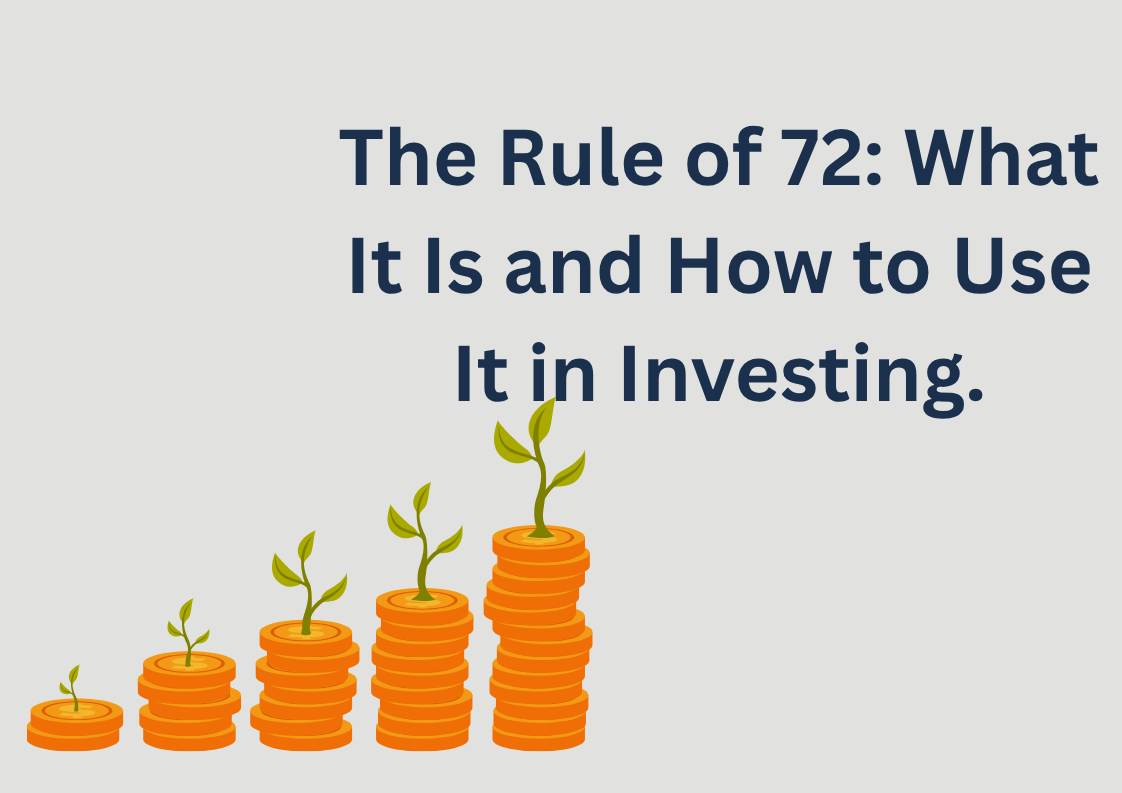

Albert Einstein famously called compounding interest the eighth wonder of the world. In long-term investing, compounding happens when your investment returns start earning their own returns. Over a twelve-month horizon, the effect is barely noticeable. Over a decade or more, it becomes a wealth-generating snowball.
Consider a practical example on the Nigerian Exchange (NGX). If you invest in a fundamentally strong, high-dividend-yielding stock like Zenith Bank or GTCO and consistently choose to reinvest those dividend payouts back into buying more shares rather than spending them, your share volume grows exponentially. You are no longer just gaining from capital appreciation; you are compounding your ownership stake year after year.
Time in the Market vs. Timing the Market: Why Waiting Beats Guessing
Many retail investors damage their portfolios by trying to guess exactly when the market will hit rock bottom to buy, or peak to sell. This is known as "timing the market," and it is a losing game. "Time in the market"—the absolute duration your money stays invested—is what truly dictates long-term success.
Trying to time the NGX is notoriously difficult due to macroeconomic shifts, inflation trends, and foreign exchange policy adjustments. Investors who stayed consistently exposed to blue-chip Nigerian equities over the last decade built sustainable wealth, while those who hopped in and out frequently missed the growth windows entirely, all while wasting capital on excessive broker commissions and statutory fees.
The Danger of the "Best Days": What Happens When You Miss Sudden Market Rallies
The biggest risk of trying to time the market is missing out on its sharpest upward swings. Stock market recoveries often happen abruptly, packed into a handful of exceptionally bullish trading days. If you are sitting on the sidelines in cash during those days, your long-term returns suffer drastically.
We saw this clearly during the historic post-pandemic rally of the NGX All-Share Index (ASI) in late 2020, and again during the massive equity surges in early 2024. Investors who panicked and liquidated their positions missed single-week rallies that accounted for the bulk of the market's annual gains. Missing just a few of those peak days can permanently flatten an investor's wealth trajectory.
Riding Out the Waves: Why Market Corrections Are Just Blips on a Long-Term Chart
Market corrections—periods where stock prices drop by 10% or more from their recent highs—are an entirely normal part of the financial cycle. For a short-term trader, a correction feels like a crisis. For a long-term investor, it is simply a blip on a much larger chart.
Looking back at Nigeria’s market history, the NGX has survived major macroeconomic shocks, including the 2008 global financial crash, multiple currency devaluations, and oil price collapses. In every single instance, the index eventually recovered and pushed to new record highs. When you expand your time horizon, short-term market volatility transforms from a threat into a series of minor bumps on a long upward road.
Developing Investment Discipline: Shifting from a Trader Mindset to an Owner Mindset
To survive these market waves, you must shift from a trader mindset to an owner mindset. A trader views a stock as a piece of digital paper to be flipped for a quick profit based on daily price charts. An owner views a stock as a fractional piece of a real, living business.
When you buy shares of a dominant consumer goods giant like Dangote Cement or BUA Foods, you are not just betting on a ticker symbol. You are partnering in a massive infrastructure and manufacturing footprint across West Africa. When the market panics and the stock price drops slightly, an owner doesn't rush to sell; they recognize that the factories are still running, the products are still selling, and the intrinsic value remains intact.
The Historical Odds: Analyzing NGX Performance Over Decades
The historical data overwhelmingly favors the patient investor. While the S&P 500 in the United States has reliably generated positive returns over rolling 20-year periods across its history, the NGX All-Share Index boasts its own compelling track record of long-term resilience.
Despite operating within a high-inflation environment, the NGX index has delivered staggering multi-year returns for those who held through economic transitions. Over the past decade, the broader Nigerian market has consistently proven that patient capital invested in top-tier corporate performers outperforms short-term cash savings, effectively serving as a powerful hedge against domestic inflation.
Companies Need More Time to Execute Their Vision
When you buy into a company, you are buying into a corporate strategy. Corporate transformations do not happen over a financial quarter or a single fiscal year. Businesses need time to deploy capital, build new factories, launch new product lines, or expand into new geographic territories.
Think about the long-term journey of a telecom giant like MTN Nigeria. Building out fiber-optic infrastructure, expanding 4G and 5G data networks across the country, and scaling mobile money platforms (like MoMo PSB) required billions of Naira in capital expenditure and years of patient execution. Investors who dumped the stock at the first sign of regulatory friction missed out on the massive value created once those long-term infrastructure investments finally matured and began generating stable, high-margin revenue.
Setting Your Horizon: Defining What "Long Term" Means for Your Goals
A successful long-term strategy requires an explicit definition of your personal investment horizon. Generally, "long term" implies a commitment of at least five to ten years, aligned with major life milestones rather than temporary financial targets.
Are you investing to fund a child’s future university tuition, secure a down payment for a home, or build an independent retirement nest egg? By tying your equity portfolio to these multi-year objectives, you naturally insulate yourself from the temptation to check stock prices daily. Your goals dictate your timeline, and a longer timeline fundamentally lowers your risk of capital loss.
When to Actually Sell: Legitimate Reasons to Part Ways with a Long-Term Stock
Being a long-term investor does not mean holding a stock blindly forever. There are legitimate, strategic reasons to sell a position, but they are rarely driven by a falling stock price alone.
You should consider parting ways with a long-term stock if:
- The fundamental business model breaks: For example, if a company faces permanent technological obsolescence or structural mismanagement that compromises its earning power.
- Your financial goals change: If you have finally reached your target retirement age or milestone, it makes sense to gradually reallocate capital from equities into capital-preserving fixed-income assets.
- Portfolio rebalancing is required: If one specific stock grows so rapidly that it dominates 50% of your total portfolio, trimming the position to manage risk is a completely rational move.